.png)
Communication Breakdowns in Relationships: How to Repair

It starts with something small.
A dish left in the sink.
A text that went unanswered.
A tone that sounded sharper than either of you meant.
Within minutes, you're no longer talking about the dishes. You're talking about who always does more, who never listens, and whether the other person even cares.
Communication breakdowns in relationships rarely happen because two people stopped loving each other. They usually happen because both people feel unheard at the same time.
The good news is that most couples don't need to stop disagreeing. They need to get better at repair.
What Causes Communication Breakdowns in Relationships?
Communication breakdowns in relationships happen when stress, old hurts, or a sense of threat take over a conversation. Instead of trying to understand each other, both partners start protecting themselves. The topic becomes less important than the feeling of not being heard, respected, or safe.
Common triggers include:
Chronic stress from work, parenting, finances, or health
Unresolved past conflicts that resurface inside new arguments
Different conflict styles, such as one partner who pursues and one who withdraws
Feeling criticized, dismissed, or unappreciated
Exhaustion, which leaves less patience and less capacity to listen
Key Takeaways
Conflict is a normal part of every relationship. How couples repair afterward matters more than how often they argue.
Most communication breakdowns follow a recognizable pattern you can learn to interrupt.
Repair is a skill both partners can practice, not a personality trait.
The Four Patterns That Escalate Conflict
Relationship researcher Dr. John Gottman identified four communication patterns, which he calls the "Four Horsemen," that tend to escalate conflict and wear down connection over time.
Criticism
Criticism attacks the person rather than the behavior. "You never think about anyone but yourself" lands very differently than "I felt hurt when our plans changed without a heads-up."
Contempt
Contempt shows up as sarcasm, mockery, eye-rolling, or name-calling. It communicates superiority, and Gottman's research identifies it as one of the strongest predictors of relationship breakdown.
Defensiveness
Defensiveness often sounds like excuses or counter-complaints. It is usually an attempt to protect yourself from feeling blamed, but it can leave your partner feeling that their concern doesn't matter.
Stonewalling
Stonewalling happens when one partner shuts down, goes silent, or leaves the conversation. It is often a sign of being emotionally flooded, not a sign of not caring.
A Couples Therapist's Framework for Repair
A repair is anything that slows down conflict and helps you reconnect, even in the middle of a disagreement. In couples therapy, we often practice a simple five-step framework:
Pause when you're flooded. If your heart is racing or you can't think clearly, take a break of at least 20 minutes and agree on when you'll come back to the conversation.
Calm your nervous system. Use the break to breathe, walk, or do something soothing, not to rehearse your argument.
Start softly. Open with "I feel... about... and I need..." instead of "You always..."
Reflect before you respond. Summarize what you heard your partner say before sharing your side.
Take responsibility for your part. Even a small acknowledgment, like "I can hear that my tone came across as harsh," can shift the whole conversation.
How to Repair After Communication Breakdowns in Relationships
A repair attempt doesn't have to be perfect. It can be humor, a gentle touch, or one simple sentence:
"Can we start over?"
"I'm getting defensive. Give me a minute."
"I want to understand you. Can you say that again?"
"We're on the same team here."
What matters most is that the attempt is offered, and that the other partner notices it and lets it land.
When Couples Therapy Can Help
Couples therapy may help if:
The same argument keeps happening without resolution
One or both partners have started to withdraw
Conflicts escalate quickly or feel overwhelming
You've stopped talking about important topics to avoid a fight
Trust has been shaken by secrecy, an affair, or a major life change
In couples therapy, you can slow conversations down, understand the cycle you're both caught in, and practice new ways to respond. At Peaceful Living, couples work may draw on the Gottman Method and relational therapy.
A note on safety: if conflict involves threats, intimidation, or physical harm, couples therapy may not be the right first step. Individual support and safety planning come first. The National Domestic Violence Hotline is available 24/7 at 1-800-799-7233.
Frequently Asked Questions
Are communication breakdowns in relationships normal?
Yes. Every couple experiences conflict and miscommunication. What tends to separate struggling relationships from healthy ones is not whether couples argue, but how well they repair afterward.
Can communication improve if we've been stuck for years?
Often, yes. Long-standing patterns can feel permanent, but they were learned, which means new patterns can be learned too. Progress usually starts with understanding the cycle instead of blaming each other.
What if my partner won't go to couples therapy?
You can still start on your own. Individual therapy can help you understand your part in the pattern, stay regulated during conflict, and express your needs more clearly, which often changes how the relationship feels.
How long does couples therapy take?
It depends on the couple and their goals. Some couples notice changes within a few sessions, while deeper patterns may take longer. Your therapist can talk with you about what to expect.
Meet Dana Carretta-Stein
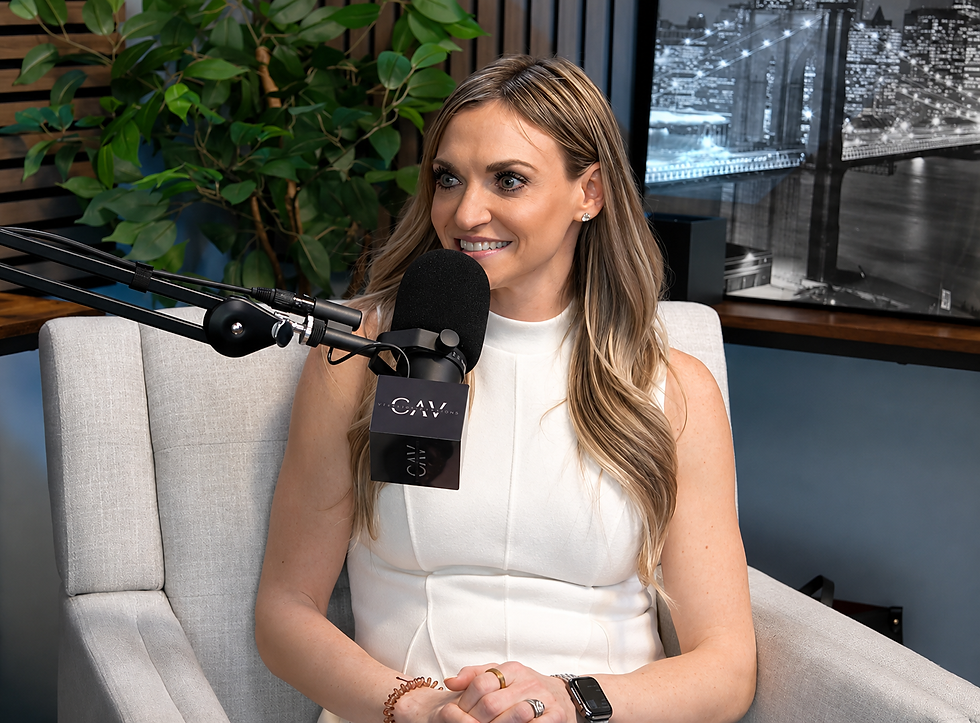
Dana Carretta-Stein, LMHC, is the CEO of Peaceful Living Mental Health Counseling in Scarsdale, NY, and the host of The Truth About Healing podcast.
She holds an M.S. in Mental Health Counseling from Pace University, is licensed as an LMHC in New York and Florida and as an LPC in Connecticut, and is an EMDRIA Certified therapist and EMDRIA Approved Consultant. Her work focuses on trauma, anxiety, and parenting, including PTSD and complex PTSD, panic attacks, chronic stress, and EMDR therapy.
Why Choose Peaceful Living Mental Health Counseling?

Peaceful Living Mental Health Counseling supports couples, individuals, and families experiencing conflict, disconnection, stress, anxiety, and trauma that can strain even strong relationships.
We offer:
Couples therapy, including the Gottman Method
Relational therapy
Individual therapy for adults, teens, and children
Anxiety treatment
Trauma-informed therapy and EMDR therapy
In-person therapy in Scarsdale and throughout Westchester County
Virtual therapy throughout New York, New Jersey, Connecticut, Colorado, and Florida
We provide in-person therapy at our office at 188 Summerfield Street in Scarsdale and throughout Westchester County, with virtual therapy options for eligible clients in states where our clinicians are licensed.
You don't have to wait until your relationship is in crisis to ask for support.
The EMDR Therapy Progress Journal

For individuals already participating in EMDR therapy, the EMDR Therapy Progress Journal provides a private, structured way to reflect on emotions, triggers, body responses, and patterns between therapy sessions.
The journal is designed to complement EMDR therapy, not replace professional mental health care.
Relevant Resources & Tools
This blog is for educational purposes only and is not a substitute for medical or mental health advice. If you are in crisis, call or text 988 in the U.S. or your local emergency number.


Comments